
If you have PCOS, you’ve probably been given a bunch of confusing, contradictory, or just plain wrong information about it. Lose weight, cut carbs, go on birth control, and come back in 3 months. And if none of those things felt right (or worked), you’re definitely not the only one.
PCOS affects up to 1 in 10 women of reproductive age, making it one of the most common hormonal conditions out there. And yet there is SO much misinformation surrounding PCOS and how to treat it. So let’s set the record straight, starting with the most persistent myths and ending with what actually helps (like the herbs in the Cysters Kit).
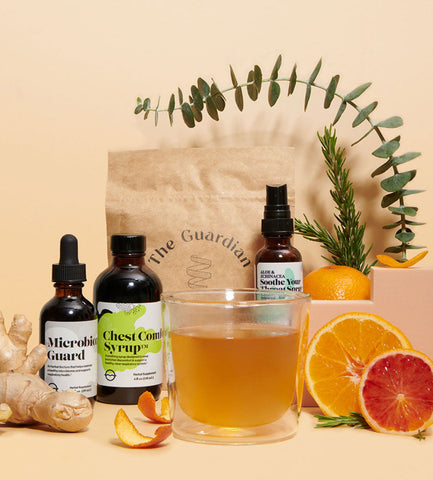
A daily duo to support healthy ovulation, metabolism, insulin signaling and androgen levels in those with irregular cycles.* STAR HERB: Saw Palmetto
PCOS Kit
A Quick Note on Root Causes of PCOS
Before we dive in, it’s worth knowing that PCOS symptoms are hormone-driven, but hormones aren’t actually the root cause. They’re the downstream effect of three main culprits that, when left unchecked, keep your hormones out of balance no matter what you try.
-
Metabolic dysfunction – when blood sugar dysregulation leads to insulin resistance, your ovaries respond by pumping out excess testosterone. Elevated insulin also inhibits your liver's production of sex hormone binding globulin (SHBG), which is responsible for binding up excess androgens. The result is hyperandrogenism, and all the symptoms that come with it: acne, hair thinning, hirsutism, irregular cycles, and low progesterone.
-
Chronic inflammation – women with PCOS almost always show elevated levels of oxidative stress, driven by poor diet, chronic stress, nutrient deficiencies, and impaired liver detoxification. This creates a continuous inflammatory environment that keeps hormones perpetually out of balance and makes symptoms harder to manage over time.
-
Impaired mitochondrial function – your mitochondria play a crucial role in ovarian function, hormone production, and insulin signaling. When they're not working properly, there's a major domino effect: more oxidative stress, impaired androgen metabolism, disrupted follicle development, and worsening insulin resistance. Addressing mitochondrial health is one of the most underappreciated pieces of the PCOS puzzle.
Myth #1: PCOS only affects overweight people
This one does some real damage. About 40-50% of women with PCOS have lean PCOS, meaning that they’re of a “normal” weight but present with all the symptoms of PCOS. It’s notoriously underdiagnosed purely because patients don’t fit the expected profile or fit in a perfect box. There are actually four distinct types of PCOS (insulin-resistant, adrenal, post-pill, and inflammatory), and not all of them present with weight gain.
PCOS is a hormonal, inflammatory, and metabolic condition, full stop. Your body size doesn’t determine these factors. Dismissing symptoms purely because someone doesn’t look like they have PCOS delays a proper diagnosis and getting real support. Not cool.
Myth #2: Birth control and Metformin are your only options
While these two commonly prescribed medications for PCOS manage symptoms, they don’t address the root cause(s). Birth control suppresses your cycle to regulate it artificially (basically telling your body that you’re pregnant with a daily dose of progesterone), and Metformin targets insulin resistance without supporting the other reasons why you might have metabolic dysfunction.
Here’s what the research supports for root cause care:
Adaptogens like Ashwagandha regulate your HPA axis and reduce cortisol, which has a cascading effect on insulin and testosterone. One study showed that daily Ashwagandha significantly reduced morning cortisol AND DHEA-S levels. Lower cortisol means less insulin resistance, which means lower androgens. It's all connected.
Anti-androgenic herbs like Saw Palmetto, Nettle Root, and White Peony work by blocking the conversion of testosterone to DHT (the more aggressive form of testosterone responsible for most of the unwanted PCOS symptoms like acne, hirsutism, and hair thinning). Nettle root also decreases free testosterone and total DHEA by inhibiting the 5-alpha-reductase enzyme. White Peony facilitates the conversion of testosterone into estrogen, further supporting androgen balance.
Insulin-sensitizing botanicals like cinnamon, ginger, gymnema, and bitter melon support healthy glucose metabolism. Cinnamon alone has been shown to upregulate the GLUT4 glucose transporter (improving how your cells take up sugar from your blood). One clinical trial found that cinnamon significantly lowered Anti-Müllerian hormone (AMH) – a hormone tightly linked to PCOS – to levels comparable to those of Metformin. When combined with ginger, cinnamon has also been shown to support FSH and LH levels in women with PCOS.
Targeted nutrients matter too. B vitamins are critical for women with PCOS because they support insulin signaling, histamine metabolism, and Phase I/II liver detoxification, all of which are commonly disrupted in PCOS. B6 in particular is a cofactor for the DAO enzyme that breaks down histamine, and studies show that B12 and folate deficiencies are closely tied to elevated homocysteine and insulin resistance in women with PCOS. L-Carnitine and CoQ10 directly nourish mitochondrial function. Magnesium, Vitamin D, Omega-3s, and selenium round out the picture, addressing the inflammation and oxidative stress driving the condition at a cellular level.
Myth #3: You have to cut out all carbs to heal
This one is particularly maddening, especially because it’s so widespread! Women NEED carbs for healthy hormone production. Full stop. Carbs support thyroid function, cortisol regulation, and progesterone production. In fact, going too low-carb can actually increase cortisol levels, worsening insulin resistance and hormone imbalances over time (because your body chooses survival/fight or flight over hormones/reproduction every single time).
So the real goal here is blood sugar stability. That looks like:
-
No naked carbs! Always pair them with a protein and/or fat to slow the glucose release
-
Choose complex carbs like fruit, beans, root vegetables, and whole grains
-
Eat a balanced, protein-rich breakfast within an hour of waking up
-
Drink your morning coffee after eating
-
Increase soluble fiber to slow the release of glucose (flax seeds, chia seeds, beans, root veggies, oats)
-
Consider taking 1 tsp of vinegar (or GlucoBitters) before meals to blunt blood sugar spikes
That said, for some people, a short-term therapeutic reduction in carbs can help resensitize their cells to insulin. This is what Olivia did in the early days of her body recomposition journey to manage her PCOS, along with strength training, eating adequate protein, taking GlucoBitters, and herbal support. The goal is always to build back flexibility, not to restrict anything forever – especially carbs. Note: if you’re an athlete or a very active woman, restricting carbs is never a good idea.
Myth #4: PCOS means you have ovarian cysts
Confusingly, the name is a little misleading. While “polycystic” suggests the presence of cysts, not everyone with PCOS has them. The term refers to the appearance of the ovaries, which may be enlarged and contain tiny fluid-filled follicles, but the presence of cysts is not a definitive factor anymore. A proper diagnosis is based on a combination of symptoms, cycle patterns, hormone levels, and metabolic markers. In other words, you can have PCOS without cysts, and you can have cysts without PCOS.
Myth #5: If your period is regular, you don’t have PCOS
Yes, irregular periods are a hallmark of PCOS, but definitely not the only one. Some people with PCOS have regular cycles but may experience other telltale signs like high androgen levels (which often cause acne, hair loss, hirsutism, and other symptoms). As we talked about earlier, PCOS has multiple phenotypes. The idea that it only looks one specific way has kept so many of us from getting the answers we deserve.
Myth #6: Losing weight will cure your PCOS
Weight is typically a symptom of PCOS, not the cause of it. The same hormonal and metabolic dysfunction driving PCOS also makes weight management harder, which makes the directive “just lose weight” not only unhelpful but genuinely backwards. The insulin resistance, mitochondrial dysfunction, and chronic inflammation at the root of PCOS are what create the conditions for weight gain in the first place. Addressing those root causes is what creates real, lasting change. Of course, weight loss can reduce symptom severity for some, but it doesn’t address everyone’s unique root cause.
Myth #7: PCOS is just a reproductive issue
PCOS affects far more than just your monthly cycle. It’s a full-body metabolic condition that shows up across virtually every body system. There’s the hair loss, skin issues, fatigue, mood dysregulation, thyroid disruption, gut problems, and more. Thus, treating PCOS as only a fertility concern means that we’re missing the bigger picture and leaving a whole host of symptoms unaddressed!
Tips for Managing Your PCOS Naturally
-
Stabilize your blood sugar. This is the foundation. Eat consistently throughout the day, never skip meals (especially when stressed), always pair carbs with protein and fat, and use insulin-sensitizing herbs to support your glucose response. Expose your naked eyes to natural morning light as soon as you wake up to support your insulin sensitivity. Get up and move every 1-2 hours or so and aim for a short walk after meals, even if it’s just around the block.
-
Move your body daily. Exercise is one of the most powerful tools for PCOS, particularly resistance training, as it builds lean muscle mass and directly improves insulin sensitivity. A 30-min walk or a 20-minute weight circuit are both great starting points. Even if you can’t carve out one dedicated chunk of time to work out, a short movement break is still deeply beneficial.
-
Support your stress response (easier said than done). Cortisol and insulin exacerbate each other in a vicious cycle. Prioritizing nervous system regulation (through sleep, movement, genuine rest, proper fueling, meditation) is essential for keeping your body in rest and digest or parasympathetic mode.
-
Eat an anti-inflammatory diet. Focus on whole foods rich in antioxidants, healthy fats (avocado, walnuts, olive oil, fatty fish), fiber, and minerals. Increase Omega-3 fatty acids, enjoy pasture-raised eggs and lean meats, reduce processed foods and refined sugar, and incorporate probiotic-rich foods for gut balance. Green tea is a wonderful swap for coffee if you can tolerate caffeine since it supports both blood sugar and androgen balance!
-
Lean on targeted herbs and supplements (after diet and lifestyle, always!). The three categories of herbs most important for PCOS are adaptogens, anti-androgens, and insulin sensitizers, and you can find them all in the Cysters Kit. Beyond herbs, prioritize B vitamins, magnesium, vitamin D, Omega-3s, CoQ10, L-Carnitine, selenium, and chromium.
-
Support your liver. It metabolizes excess hormones, processes histamine, and manages your body’s main detoxification pathways. Therefore, you can see why a sluggish liver could cause hormone levels to get out of whack. Castor oil packs, bitter foods, and liver-supporting herbs can all help unburden your liver and keep things flowing as they should.