
We’ve been sold a very expensive lie that great skin comes from a serum, cream, or face oil. And while we’re absolutely not claiming to be anti-topical over here, the most transformative skincare routine we know of is what you put IN your body. So here are the wild herbs that we’re obsessed with right now for plump, hydrated skin, and exactly what they’re doing from the inside out.
Gotu Kola: the wild green better than any greens powder

Its triterpenoid saponins directly stimulate collagen synthesis, improve skin elasticity, accelerate wound healing, and strengthen connective tissue. Gotu kola is the kind of herb that makes you wonder why we ever started putting collagen in creams instead of just eating this.
How to eat it: toss the leaves into salads or blend them into smoothies.
Calendula: the inflammation healer

Puffy or reactive skin usually stems from underlying inflammation, and calendula is one of the most effective herbs at addressing it. It works as a lymphagogue, meaning that it moves stagnant fluid and clears the congestion that shows up on your face before you realize something is off. It’s also mildly estrogenic, which supports skin plumpness in a gentle way.
How to eat it: add a handful of whole flowers to bone broth, or sprinkle fresh petals over salads.
He Shou Wu (Fo-Ti): the blood builder

Found in our Mane Magic formula, He Shou Wu is a revered Chinese tonic herb with a cult following for good reason. In TCM, "blood deficiency" shows up as dry, lackluster, prematurely aging skin, and He Shou Wu is one of the best herbs for building and nourishing blood from within. Its stilbene glycosides also have antioxidant activity comparable to resveratrol!
How to eat it: stir the powder into a warm cacao drink.
Schisandra Berry: the stress shield

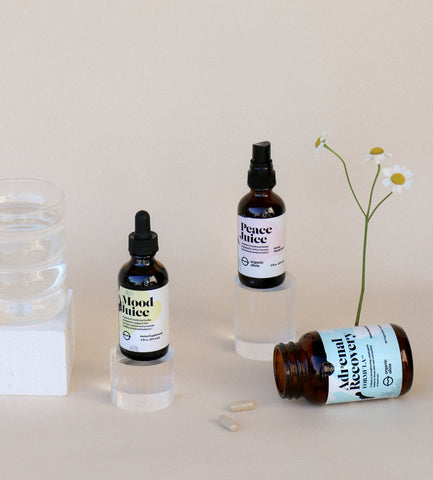
Found in Adrenal Recovery, the "five-flavor berry" takes a totally unique approach to skin by working upstream. Schisandra supports liver detoxification (because what your liver can't process shows up on your skin!), protects against UV damage and environmental stress via its powerful lignans (which have significant antioxidant and anti-inflammatory action), and promotes water retention in skin cells.
How to eat it: make or purchase a concentrate that you can add to sparkling water or mocktails.
Burdock Root: the great purifier

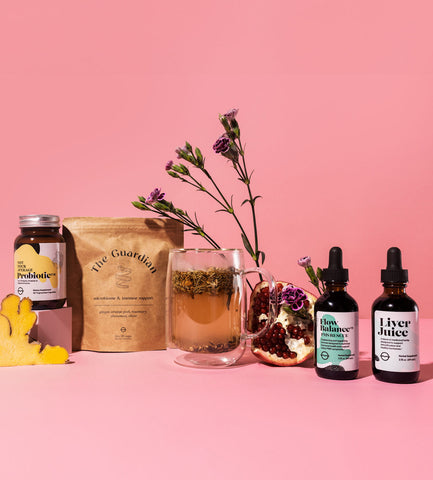
Found in Liver Juice, burdock is a classic blood purifier and alterative. In other words, it moves metabolic waste OUT through the liver and kidneys, directly helping to reduce acne, eczema, and other inflammatory skin conditions that come from a burdened or sluggish liver. Additionally, its inulin content feeds gut microbiome diversity, which is increasingly linked to skin barrier integrity.
How to eat it: brew the dried root as a tea or find the fresh root at your local Asian grocery store (it may be labeled as “Gobo”) and sauté it into stir-fries or try making Kimpara.
Nettles: the mineral boost your skin needs

Humble, underrated, and wildly effective. These wild greens are rich in silica, the structural mineral behind collagen (hi skin and nails), making them one of the best foods you can eat for skin that actually holds its shape over time. They’re also a potent antihistamine, making them incredible for reactive, histamine-driven skin conditions like rosacea flares or hives. So eat your nettles!
How to eat it: blanch the leaves and use them in place of greens in a pesto! This is delicious on pasta.
Lotus Seed (Lian Zi): the secret for congested skin

In TCM, the spleen governs the transformation and transportation of nutrients. Therefore, when Spleen Qi is weak, those nutrients don’t reach your skin efficiently, resulting in a sallow, undernourished complexion that topicals can’t touch. Lotus seed strengthens that digestive-to-skin pipeline, and its astringent quality helps dry up "damp" skin that manifests as congestion, oiliness, cystic acne, and swelling. What makes lotus seed especially fascinating is the emerging research around its ability to inhibit elastase and collagenase — the enzymes that actively break down your skin's structural proteins. In other words, it’s working defensively to preserve what you have, not just build more.
How to eat it: make a traditional Chinese lotus soup.
Jujube Date (Da Zao): for a lit-from-within glow

In herbal skin philosophy, blood quality is skin quality. Blood deficiency shows up as dryness, fine lines, dullness, and a kind of translucent thinness of the skin. Jujube builds and moves blood, which is exactly what creates that elusive lit-from-within quality we all want. Its saponins and polysaccharides support collagen synthesis and cellular hydration, and it’s extremely high in bioavailable Vitamin C — a direct cofactor for collagen synthesis.
But perhaps the most underrated thing about jujube is that it’s a nervous system tonic. It calms the shen (spirit/mind) and reduces cortisol-driven stress responses. As we know, chronic stress is one of the most overlooked drivers of skin aging, depleting collagen via cortisol, triggering inflammatory cascades, and disrupting the skin barrier.
How to eat it: enjoy dried jujubes straight from the bag as a sweet treat. Or simmer them in hot water with ginger for a subtly sweet and spicy, nourishing tea.