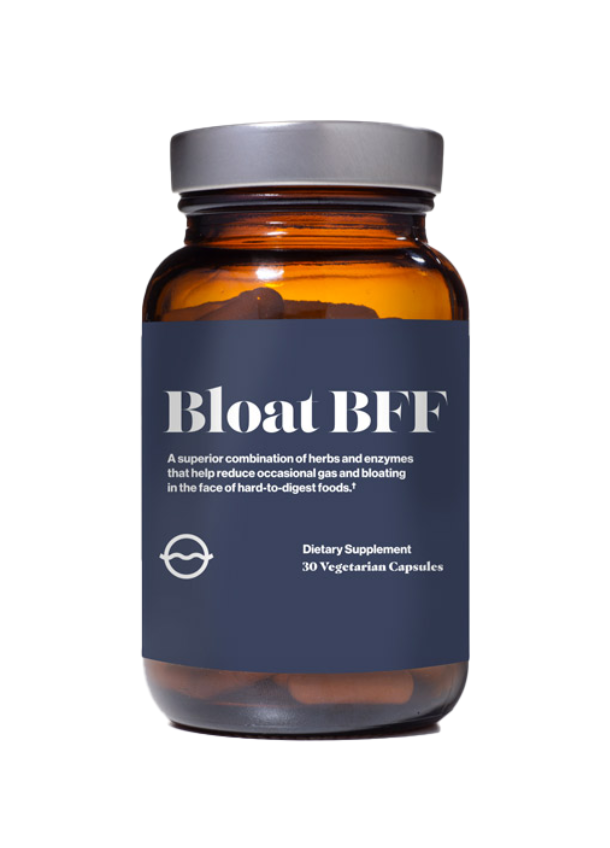
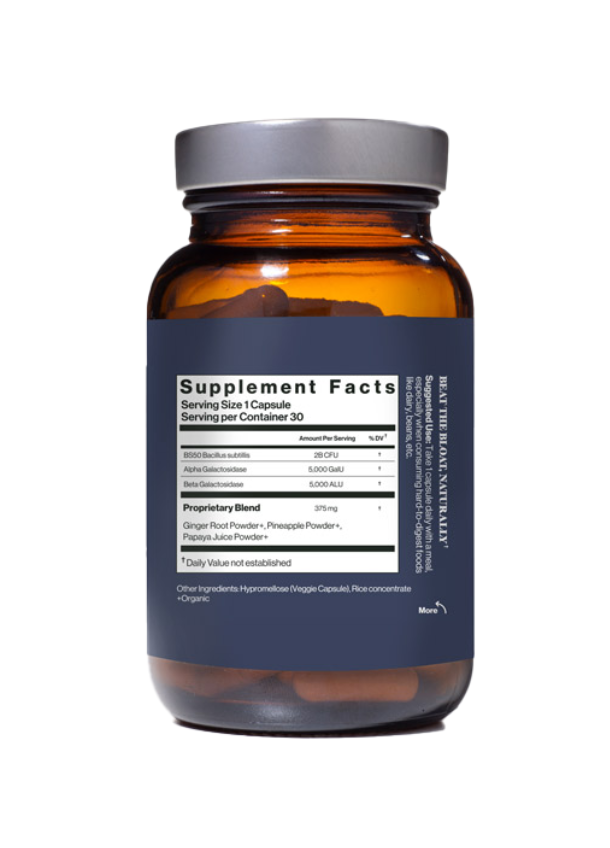
To round out this formula that helps even the most sensitive stomachs, we chose a probiotic strain that is SIBO-safe and well tolerated in those with recurring digestive issues and microbiome imbalance. Spore-forming probiotics like BS50 Bacillus Subtilis increase your own microbial diversity, like an ‘adaptogen for the microbiome,’ without adding more bacteria into the terrain in cases where overgrowths may already be present. This clinically studied strain helps to alleviate gas from high-FODMAP foods that may trigger fermentation in the small intestine, helping you eat more of the healthy foods you want to incorporate, whether that’s beans or more fiber-rich veggies, without discomfort.
When you have chronic gut issues, the first step many people take is to change their diet — consume healthier foods, eat more fiber, get more plants and color on your plate. Yet for many of us these ‘healthy’ dietary changes only bring more gas, bloating, and symptoms of discomfort. While it’s common to attribute this to food sensitivities, the underlying reason may actually be a microbial imbalance in the small intestinal environment: dysbiosis known as SIBO (small intestinal bacterial overgrowth).
When the small intestine contains too much pathogenic bacteria, these bacteria can begin to ferment the healthiest of foods — the product of that fermentation is unwanted gas, bloating, and uncomfortable feelings of distention and pressure. Those with SIBO and chronic gut complaints may even find that taking a traditional probiotic supplement (or consuming probiotic foods and drinks, like Kombucha) actually worsens their symptoms. Even the ingestion of beneficial bugs can be like adding fuel to the fire.
The answer? Meet soil based, aka spore-forming probiotics: dormant when ingested, these beneficial bugs become active when they reach the nutrient-rich environment of the small intestine, and get to work producing enzymes and other active compounds that deter unwanted organisms. Their job is to gently push non-resident and potentially pathogenic bacteria out of the small intestine, helping to restore proper microbial diversity and balance.
But unlike most probiotic strains, spore-forming probiotics are not commensal to the gut — meaning they’re ideal for SIBO, as they leave the small intestine when they are done doing their job as a ‘re-balancer,’ and are less likely to contribute to any bacterial overgrowth that may be occurring. They don’t colonize the small intestine or feed the bacteria already growing there. Instead, these probiotics head straight to the large intestine and colon where they can support vibrant health benefits.
Spore-forming probiotics also produce necessary nutrients like short-chain fatty acids, vitamins, antioxidants, and other compounds necessary for nurturing the gut lining and re-establishing the gut terrain.
Spore-forming probiotics are shown to have better outcomes, specifically for SIBO-type patients, compared to traditional probiotics like Lactobacillus. They are also superior to a low-FODMAP diet alone in relieving SIBO-like symptoms, according to recent research.
In a randomized, double-blind clinical trial of healthy adults, supplementation of BS50 Bacillus Subtilis (a spore-based probiotic strain) significantly improved symptoms of bloating, burping and flatulence in patients after 6 weeks of taking it (1). While the mechanism of action is still a topic of exploration, BS50 has been shown to secrete digestive enzymes, aiding in food digestion and resulting in reduced fermentation and gas production in the lower intestine (2). In particular, Bacillus subtilis produces enzymes that help break down complex carbohydrates and proteins – two things known to give us grief in the boating department. Additionally, BS50 and other spore-based probiotics actually increase nutrient concentrations in the gut which has a satiating effect on our brains, thus reducing the urge to overeat and mitigating bloat from simply being too full.